
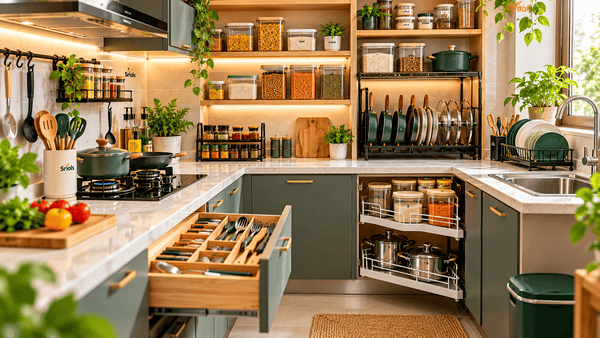
A kitchen is one of the most important areas of any home. It is where meals are prepared, groceries are stored, and families spend time together. However, keeping a small kitchen organized can sometimes be challenging.
Limited counter space, crowded cabinets, scattered utensils, and overflowing storage containers can make everyday cooking difficult.
The good news is that you don’t need a large kitchen to create an organized and functional space. With a few smart storage solutions and simple organization habits, you can make even a small kitchen more comfortable and convenient.
In this guide, we will explore 12 practical tips on how to organize a small kitchen and make better use of the available space.
1. Declutter Your Kitchen First
Before purchasing new kitchen organizers, start by removing unnecessary items.
Many kitchens contain unused utensils, empty containers, duplicate tools, expired food products, and appliances that are rarely used.
Take everything out of your cabinets and drawers and divide the items into three groups:
- Items you use regularly.
- Items you use occasionally.
- Items you no longer need.
Keep frequently used products within easy reach and move occasional-use items to less accessible storage areas.
Removing unnecessary items is the first step towards creating an organized kitchen.
2. Use Airtight Storage Containers
Food storage containers are among the most useful products for organizing a kitchen.
Instead of keeping rice, pulses, flour, sugar, and other ingredients in different packaging, transfer them into suitable food-storage containers.
Benefits include:
- Better organization of pantry items.
- Easier identification of ingredients.
- More efficient use of cabinet space.
- Convenient access during cooking.
- Better protection from moisture when properly sealed.
Choose food-contact-safe containers with secure lids. Transparent containers are particularly useful because you can see their contents without opening them.
3. Make Use of Vertical Space
One common mistake in small kitchens is using only horizontal storage space.
Walls and vertical surfaces can provide additional storage opportunities.
Consider installing:
- Wall-mounted shelves.
- Kitchen utensil holders.
- Hanging hooks.
- Cup holders.
- Suitable wall-mounted racks.
These solutions can help free up valuable countertop space.
Before installing anything, check the wall material and ensure the fixtures are securely mounted.
4. Install Drawer Organizers
Kitchen drawers often become messy because different utensils are stored together.
Spoons, forks, knives, spatulas, and other accessories can become difficult to locate.
Drawer organizers help divide a single drawer into smaller sections.
You can use separate compartments for:
- Spoons and forks.
- Kitchen knives.
- Cooking accessories.
- Measuring spoons.
- Small kitchen tools.
Choose organizers that fit your drawer dimensions to avoid wasting space.
5. Use Stackable Storage Solutions
Stackable containers and organizers can make better use of cabinet space.
Instead of arranging everything randomly, use containers and racks that can be placed vertically.
Some useful options include:
- Stackable food containers.
- Stackable baskets.
- Cabinet shelf organizers.
- Stackable spice containers.
- Multi-level storage racks.
Always check the stability and weight capacity of storage products before stacking them.
6. Organize Your Refrigerator Properly
A refrigerator can quickly become cluttered if food items are stored without a system.
A simple organization routine can make it easier to find ingredients and reduce food wastage.
Try these practices:
- Store similar food items together.
- Use suitable refrigerator storage containers.
- Keep raw and ready-to-eat foods separated.
- Label containers with storage dates.
- Check expired and spoiled food regularly.
- Follow the refrigerator manufacturer’s storage recommendations.
Avoid overfilling the refrigerator because proper air circulation is important for maintaining consistent cooling.
7. Create a Dedicated Spice Storage Area
Spices are essential in Indian cooking, and most kitchens contain several varieties.
Keeping spice packets scattered across shelves can make cooking inconvenient.
Create a dedicated spice storage area using:
- Spice jars.
- Spice racks.
- Drawer spice organizers.
- Rotating spice organizers.
- Clearly labelled containers.
Arrange frequently used spices in easily accessible locations.
Make sure spice containers are clean, dry, tightly closed, and stored according to the ingredient’s storage requirements.
8. Keep Frequently Used Items Within Reach
A well-organized kitchen should make everyday cooking easier.
Items used regularly should be stored in convenient locations.
For example:
- Keep everyday cooking utensils near the cooking area.
- Store commonly used spices together.
- Keep frequently used plates and glasses accessible.
- Place dishwashing supplies near the sink.
- Store everyday food ingredients in convenient cabinets.
This simple arrangement can reduce unnecessary movement while cooking.
9. Use the Space Under Your Kitchen Sink
The area under the kitchen sink is often underutilized.
With suitable organizers, this space can be used for storing cleaning accessories and household supplies.
Useful storage options include:
- Small storage baskets.
- Removable organizers.
- Cleaning cloth holders.
- Suitable racks.
- Small containers for cleaning accessories.
Keep cleaning chemicals separate from food items and store them safely, away from children and pets.
Also, avoid storing products in areas where plumbing leaks or excess moisture may damage them.
10. Organize Pots, Pans and Lids
Pots, pans, and their lids can occupy considerable cabinet space.
Instead of stacking everything randomly, use suitable storage arrangements.
Some useful solutions include:
- Pan organizers.
- Vertical lid holders.
- Cabinet dividers.
- Hanging cookware racks.
- Stackable cookware arrangements.
Choose an arrangement that allows you to remove one item without disturbing the entire stack.
11. Keep Your Kitchen Countertops Clutter-Free
Kitchen countertops are important working areas. When they become crowded, everyday cooking and cleaning become difficult.
Follow a simple rule: keep only frequently used items on the countertop.
You can keep:
- A utensil holder.
- A frequently used appliance.
- A small spice organizer.
- A fruit basket.
Move other items into cabinets or storage organizers.
Wipe countertops regularly and return items to their designated places after use.
12. Follow a Daily Kitchen Organization Routine
Even a well-organized kitchen can become messy without regular maintenance.
Develop a simple daily routine to keep everything in order.
After Breakfast:
- Wash used utensils.
- Clean the countertop.
- Return ingredients to their storage places.
After Lunch:
- Organize leftover food.
- Clean frequently used surfaces.
- Check the sink and kitchen dustbin.
After Dinner:
- Wash dishes.
- Wipe kitchen surfaces.
- Arrange utensils.
- Prepare the kitchen for the next morning.
A few minutes of daily maintenance can prevent clutter from accumulating.
Bonus: Essential Products for Organizing a Small Kitchen
If you want to make your kitchen more functional, consider adding these useful household products:
| Product | Main Purpose |
|---|---|
| Airtight Containers | Food storage |
| Spice Organizer | Organizing spices |
| Drawer Organizer | Arranging utensils |
| Kitchen Storage Baskets | Organizing small items |
| Wall-Mounted Racks | Using vertical space |
| Dish Drying Rack | Organizing washed dishes |
| Shelf Organizer | Maximizing cabinet space |
| Refrigerator Containers | Organizing food items |
| Sink Organizer | Storing cleaning accessories |
| Pan Organizer | Arranging cookware |
You don’t need to purchase everything at once. Start with the products that solve your biggest kitchen storage problems.
Frequently Asked Questions (FAQs)
1. How can I organize a small kitchen with limited space?
Start by removing unnecessary items, using vertical storage, adding drawer organizers, and choosing stackable containers. Keep frequently used products within easy reach.
2. What are the best storage solutions for a small kitchen?
Airtight containers, wall-mounted racks, drawer organizers, stackable baskets, and cabinet shelf organizers are useful options.
3. How can I make my kitchen look bigger?
Keep countertops clutter-free, use light colours, improve lighting, and organize storage vertically. Avoid overcrowding cabinets and shelves.
4. Are transparent kitchen containers better?
Transparent containers make it easier to identify stored ingredients. However, always choose suitable food-contact-safe containers and store ingredients according to their requirements.
5. How often should I organize my kitchen?
Basic organization should be maintained daily. A more detailed review of cabinets, drawers, pantry items, and refrigerator storage can be done weekly or whenever required.
Final Thoughts
A small kitchen does not have to be a messy kitchen. With smart storage solutions, proper organization, and a few simple daily habits, you can make the most of every available corner.
Start by decluttering, organize your food ingredients, use vertical storage, and keep frequently used items within reach.
Remember, the goal is not simply to store more things but to create a kitchen where everything has its own place.
At Sriols, we believe that practical household essentials and smart organization ideas can make everyday living easier and more comfortable.
Explore better ways to organize your home and make your everyday kitchen experience more convenient.
Sriols – Cleaner Home, Healthier Tomorrow.